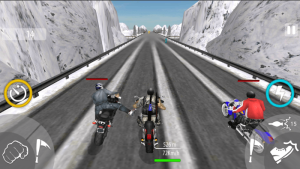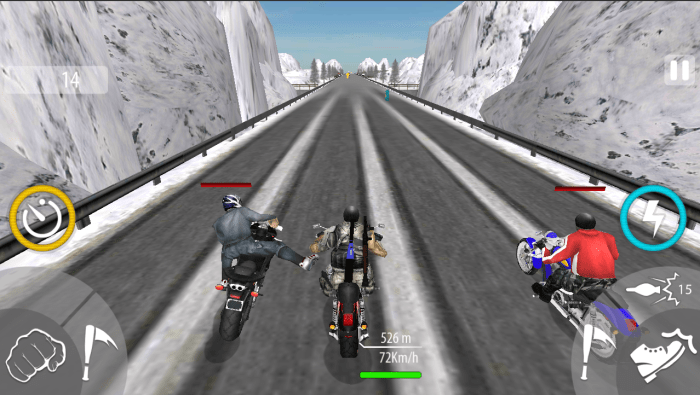
Get ready to rev your engines and unleash your inner warrior! Bike Combat Games are exploding onto the scene, blending the adrenaline-pumping thrill of racing with the strategic intensity of combat. Forget boring races; this is a high-octane battle on two wheels, where skill, strategy, and customized bikes are your ultimate weapons. Imagine death-defying stunts, explosive power-ups, and intense online battles against players worldwide.
This isn’t just a game; it’s a full-throttle experience.
From market analysis revealing the explosive growth of this genre to detailed game mechanics, monetization strategies, and stunning visuals, we’ll delve into every aspect of what makes Bike Combat Games so captivating. We’ll explore the unique challenges of online development, compare it to other genres, and even debunk some myths about its relation to unrelated industries. Buckle up, because this is going to be a wild ride!
Market Analysis of Bike Combat Games
The niche market of bike combat games presents a fascinating case study in genre blending. While not as dominant as established racing or fighting games, it possesses unique appeal and untapped potential for growth. This analysis will explore the current state of this market, identifying key demographics, competitive landscapes, and future growth opportunities.
Current Market Size and Growth Potential
Precise market figures for bike combat games are difficult to obtain due to their often being subsumed within broader racing or action game categories in market reports. However, we can infer potential from the success of similar genres. The popularity of games featuring vehicular combat, such as Twisted Metal and the various Burnout titles, suggests a significant underlying interest in this style of gameplay.
The incorporation of bikes, with their unique maneuverability and agility, adds another layer of strategic depth, potentially attracting a wider audience. Growth potential hinges on the development of high-quality, innovative titles that effectively blend intense combat with engaging racing mechanics. The rise of mobile gaming also presents a significant opportunity for expansion into a broader and more accessible market.
Successful examples like PUBG Mobile demonstrate the potential for significant player bases in this platform.
Key Demographics and Psychographics of Players
The core demographic for bike combat games likely overlaps with fans of both racing and action games. This suggests a relatively young audience, predominantly male, with a strong interest in fast-paced, competitive gameplay. Psychographically, these players are likely to value skill-based challenges, customization options, and a sense of progression. They are also likely to be active participants in online communities, engaging in competitive play and sharing gameplay experiences.
A secondary demographic might include players who appreciate the unique blend of genres, attracted by the novelty and strategic depth offered by bike combat mechanics.
Comparison to Other Racing or Combat Game Genres
Bike combat games occupy a unique space, combining elements from both racing and combat genres. Compared to pure racing games, they offer a greater emphasis on combat strategy and weapon variety. Conversely, compared to traditional fighting games, they offer a greater emphasis on speed, mobility, and environmental interaction. The success of this genre depends on its ability to balance these elements effectively, offering a unique and compelling gameplay experience that differentiates it from its competitors.
This requires careful consideration of game mechanics, level design, and overall game balance. Games that lean too heavily on either racing or combat elements risk alienating players accustomed to the core mechanics of either genre.
Current Competitive Landscape
The current competitive landscape for bike combat games is relatively fragmented. While no single dominant title currently defines the genre, several smaller developers and independent studios are actively producing games in this space. Major players in the broader racing and action game markets, such as EA, Ubisoft, and Activision, have not yet aggressively pursued this specific niche. This presents both a challenge and an opportunity for smaller developers to establish themselves as leaders in the genre.
Successful titles could attract the attention of larger publishers, leading to increased investment and market penetration.
Market Analysis Summary
| Genre | Market Size | Key Demographics | Major Players |
|---|---|---|---|
| Bike Combat Games | Difficult to quantify precisely; significant untapped potential inferred from related genres. | Predominantly young males; fans of racing and action games; value skill, customization, and online competition. | Currently fragmented; no single dominant player; opportunity for smaller developers. |
Game Mechanics and Features
Rev up your engines and prepare for some seriously intense two-wheeled combat! This section details the core mechanics, features, and modes that will make our bike combat game a roaring success. We’ll explore everything from customizable bikes and devastating power-ups to diverse game modes and dynamic environments. Get ready to experience the thrill of high-speed combat like never before!
Our game will blend fast-paced action with strategic depth, offering players a unique and engaging experience. The core gameplay loop revolves around navigating challenging tracks while engaging in intense combat with other players. This will be achieved through a combination of skillful bike handling, strategic weapon usage, and clever utilization of the environment.
Core Gameplay Mechanics
The core gameplay focuses on intense bike-to-bike combat using a variety of weapons and tactical maneuvers. Players will need to master both their bike’s handling and their combat skills to succeed. Precise aiming and timing will be crucial, rewarding skilled players while still allowing less experienced players to have fun and contribute to the action. We’ll implement a responsive and intuitive control scheme to ensure a smooth and enjoyable gameplay experience for all skill levels.
The game will feature a robust physics engine, accurately simulating bike behavior and collisions, adding a layer of realism and challenge to the gameplay.
Bike Customization Options
Players will be able to customize their bikes extensively, affecting both their appearance and performance. Customization options will range from aesthetic choices like paint jobs and decals to performance upgrades such as engine modifications, enhanced armor, and improved handling. This will allow players to create unique and personalized bikes that reflect their individual playstyles. Imagine customizing your bike’s handling for aggressive cornering, or boosting its armor to withstand more damage.
The possibilities are endless!
Game Modes
We will offer a diverse range of game modes to cater to different player preferences. These modes will provide varied gameplay experiences, ensuring high replayability.
- Deathmatch: A classic free-for-all mode where players battle it out to achieve the highest kill count within a time limit.
- Team Deathmatch: Players are divided into teams, competing to achieve the highest team kill count. This fosters teamwork and strategic coordination.
- Capture the Flag: Teams compete to capture and hold the opposing team’s flag, requiring a balance of aggression and strategic defense.
- Race Mode: A high-speed race across varied terrain, with combat elements integrated into the race. This will add a new level of excitement to the traditional racing format.
Power-Ups and Special Abilities
Power-ups and special abilities will add an extra layer of excitement and strategic depth to the gameplay. These will be strategically placed throughout the game levels or earned through in-game achievements.
- Nitro Boost: A temporary speed boost to quickly escape danger or overtake opponents.
- EMP Burst: Temporarily disables enemy bikes’ weapons and abilities.
- Missile Barrage: Unleashes a volley of missiles targeting nearby enemies.
- Invisibility Shield: Briefly makes the bike invisible to opponents, allowing for strategic repositioning or ambushes.
- Repair Kit: Instantly repairs a significant portion of the bike’s damage.
Environmental Elements
Environmental elements will be more than just background scenery; they will actively influence gameplay. Players will be able to use the environment to their advantage, utilizing terrain to their advantage for strategic maneuvers and tactical combat.
Level Design Examples
- Urban Sprawl: A densely packed city environment with narrow streets, tight corners, and elevated walkways offering diverse tactical opportunities. Imagine navigating through crowded city streets, using buildings for cover, and performing daring jumps across rooftops.
- Desert Canyon: A wide-open desert landscape with treacherous cliffs, deep ravines, and winding paths, emphasizing speed and precise bike handling. The canyons provide opportunities for ambushes and tactical maneuvering, while the open areas offer space for high-speed chases.
- Arctic Wasteland: A frozen landscape with icy surfaces, treacherous crevasses, and snowdrifts that affect bike handling and create unique challenges. Imagine navigating slippery ice patches and using the snow for cover, while the unforgiving terrain provides unexpected obstacles.
- Jungle Ruins: Dense jungle with overgrown paths, ancient ruins providing cover, and treacherous terrain, adding an element of exploration and environmental interaction. This level could feature narrow paths through dense vegetation, crumbling ancient structures for cover, and strategically placed traps.
Monetization Strategies
Choosing the right monetization strategy is crucial for the success of any game, and our bike combat game is no exception. We need a system that generates revenue without alienating players or hindering their enjoyment. Balancing player satisfaction with financial gain is a delicate act, requiring careful consideration of various models and their potential impact.
Several monetization models are suitable for a bike combat game, each with its own strengths and weaknesses. The optimal approach often involves a hybrid model, combining different strategies to maximize revenue and player engagement. We will explore the prominent options and their implications for our game.
Free-to-Play with In-App Purchases
This model allows players to download and play the game for free, generating revenue through optional in-app purchases. This approach has proven highly successful in the mobile gaming market, attracting a large player base while offering opportunities for monetization. In our bike combat game, this could involve selling cosmetic items, such as unique bike skins, character outfits, and victory emotes.
We could also offer performance-enhancing items, such as faster acceleration boosts or stronger weapons, but these would need careful balancing to avoid creating a pay-to-win environment.
In-Game Purchase System Design
The in-game purchase system should be intuitive and user-friendly, clearly displaying the price and description of each item. Items should be categorized logically, allowing players to easily browse and find what they are looking for. Transparency is key; players need to understand the value they are receiving for their money.
Here’s a possible breakdown of items and pricing:
- Cosmetic Items: Bike skins ($0.99 – $4.99), Character outfits ($1.99 – $9.99), Emotes ($0.49 – $1.99)
- Performance Boosters: Temporary speed boosts ($0.99 for 30 minutes), Increased weapon damage (1-day boost for $1.99), Enhanced armor (1-day boost for $2.99)
- Currency Packs: In-game currency packs ($4.99 – $49.99) allowing players to purchase other items more efficiently. These packs could offer bonus currency for larger purchases, incentivizing bigger spending.
- Battle Passes: A tiered system offering exclusive rewards, including cosmetic items and currency, for completing challenges and progressing through levels. These could be offered at different price points ($4.99 – $9.99)
Balancing Monetization and Player Experience
The key to successful monetization is to ensure that players feel they are getting value for their money, while maintaining a fair and enjoyable gaming experience. Avoid creating a pay-to-win scenario where paying players have a significant advantage over free players. Instead, focus on offering cosmetic items and minor performance boosts that don’t fundamentally alter gameplay. Regular updates with free content, such as new maps and game modes, will also help keep players engaged and invested in the game.
Consider implementing a system where free players can earn in-game currency through gameplay, allowing them to eventually acquire some of the paid items. This fosters a sense of progression and achievement for all players.
Premium Model
This model involves charging a one-time fee for access to the full game. While simpler to implement than a free-to-play model, it can limit the player base, as some players may be hesitant to pay upfront for a game they haven’t tried. However, it offers a less intrusive monetization experience, potentially fostering a more dedicated and loyal player community.
A premium model could be suitable if the game offers a significant amount of content and replayability.
Monetization Model Comparison
| Monetization Model | Advantages | Disadvantages |
|---|---|---|
| Free-to-Play with In-App Purchases | Large potential player base, multiple revenue streams, opportunity for continuous monetization through updates | Risk of creating a pay-to-win environment, potential for negative player perception if monetization is too aggressive |
| Premium Model | Less intrusive monetization, potentially more dedicated player base, clear pricing | Smaller potential player base, requires significant upfront investment in game development, limited revenue streams |
Art Style and Visuals
Our bike combat game will boast a vibrant, stylized art style appealing to a broad audience while staying true to the genre’s conventions. We’ll blend elements of anime and cel-shading for a dynamic, energetic look that pops on screen, enhancing the fast-paced action. This approach offers a balance between realism and cartoonish exaggeration, ensuring accessibility for younger players while maintaining visual appeal for older gamers.The visual design will prioritize clear readability and impactful aesthetics.
This means prioritizing strong silhouettes and easily distinguishable character designs, even amidst the chaos of combat. The color palette will be bold and saturated, with strategic use of contrasting colors to highlight key elements and improve visibility during gameplay.
Bike Design
Each bike will possess a unique design reflecting the rider’s personality and combat style. For example, a speed-focused character might ride a sleek, futuristic bike with aerodynamic lines, while a heavy-hitting character could pilot a bulky, heavily armored machine. Detailed textures, such as metallic scratches and weathering effects, will add realism without sacrificing the game’s stylized aesthetic. Customization options will allow players to personalize their bikes with different paint jobs, decals, and performance upgrades, further enhancing visual variety.
Environment Design
Levels will be diverse and visually engaging, ranging from futuristic cityscapes to desolate wastelands and lush, overgrown jungles. Each environment will feature unique architectural styles and environmental details to create a distinct atmosphere. For example, the futuristic city levels will be filled with towering skyscrapers, neon lights, and holographic advertisements, creating a bustling and energetic vibe. In contrast, the wasteland levels will feature crumbling buildings, rusted machinery, and barren landscapes, evoking a sense of desolation and danger.
Environmental storytelling will be subtle yet impactful, hinting at the history and lore of the game world.
Key Level: Neo-Tokyo Blitz
This level takes place in a neon-drenched, futuristic version of Tokyo. Towering skyscrapers pierce the perpetually twilight sky, their surfaces adorned with holographic advertisements that flicker and change constantly. Flying vehicles zip between buildings, adding to the sense of frenetic energy. The streets below are a maze of narrow alleyways and bustling marketplaces, offering numerous opportunities for strategic maneuvering and ambush attacks.
The overall atmosphere is a blend of high-tech excitement and underlying urban decay, creating a visually striking and engaging backdrop for intense bike combat. Rain streaks down the neon-lit streets, reflecting the city lights in shimmering puddles, enhancing the atmosphere’s vibrancy and adding to the dynamic visual spectacle.
Visual Effects for Combat and Power-Ups
The visual effects will be crucial in enhancing the game’s excitement and clarity. We’ll prioritize clear and impactful effects that are easily discernible amidst the fast-paced action.
- Combat Effects: Impact explosions will be bright and dynamic, clearly indicating successful hits. Weapon trails will be visually distinct, reflecting the unique properties of each weapon. Energy blasts will leave lingering trails of light and energy, showcasing the power of each attack. Hit sparks and screen shake will add further impact to combat events.
- Power-Up Effects: Power-up activation will be accompanied by a bright flash and a noticeable change in the bike’s appearance or aura. Speed boosts will leave trails of light or energy, clearly indicating the increased velocity. Shields will be visually represented by energy fields or glowing auras surrounding the bike. Special attacks will have unique visual cues, highlighting their power and effect.
Online Game Development Considerations
Building a successful multiplayer online bike combat game presents a unique set of challenges, requiring careful planning and execution across various stages of development. From selecting the right technology stack to managing server infrastructure and ensuring a smooth player experience, numerous factors influence the game’s viability and longevity. This section details the key considerations in bringing such a game to life.
Challenges and Considerations of Developing a Multiplayer Online Bike Combat Game
Developing a multiplayer online bike combat game requires addressing several key challenges. Network latency, for example, can significantly impact gameplay, causing noticeable delays in actions and potentially leading to frustrating experiences for players. Maintaining a stable and secure server infrastructure capable of handling a large number of concurrent players is crucial. Balancing gameplay mechanics to ensure fairness and prevent exploits is another significant hurdle.
Furthermore, the development team must manage the complexity of integrating various game features, such as weapon systems, maps, and player progression, while maintaining performance and scalability. Finally, regular updates and patches are essential to address bugs, balance gameplay, and introduce new content to retain player engagement.
Technologies and Platforms for Online Game Development
A range of technologies and platforms can be used for online game development. Popular game engines such as Unity and Unreal Engine provide robust tools and frameworks for creating both the client and server-side components of the game. For backend infrastructure, cloud platforms like AWS, Google Cloud, and Azure offer scalable and reliable solutions for hosting game servers and managing player data.
Programming languages such as C++, C#, and Java are commonly used for game development, offering different strengths and weaknesses depending on the specific needs of the project. Furthermore, database technologies like MongoDB and PostgreSQL are frequently employed for managing player accounts, progress, and other persistent data. The choice of technologies often depends on factors such as the team’s expertise, budget, and the desired scale of the game.
For example, a smaller indie team might choose Unity with a C# backend, while a larger studio might opt for Unreal Engine with a C++ backend and a more sophisticated cloud infrastructure.
Processes Involved in Online Game Development
The development process for an online bike combat game typically involves several key stages. The initial design phase focuses on defining core gameplay mechanics, art style, and overall game vision. This is followed by prototyping and iterative development, where core features are implemented and tested. Once the core gameplay loop is established, the development team can focus on adding more sophisticated features, such as weapon customization, progression systems, and social features.
Throughout the development process, rigorous testing is crucial to identify and address bugs, performance issues, and balance problems. Finally, deployment involves releasing the game to the chosen platform(s), whether it’s PC, mobile, or a console. Post-launch support is equally important, requiring continuous monitoring, updates, and community engagement to maintain player interest and address any ongoing issues. Games like Rocket League and Fortnite serve as prime examples of games that continuously receive updates and new content to maintain player engagement.
Comparison of Online Game Architectures
The choice of online game architecture significantly impacts the game’s performance, scalability, and development complexity. Below is a comparison of client-server and peer-to-peer architectures.
| Architecture | Advantages | Disadvantages |
|---|---|---|
| Client-Server | Centralized control, easier cheat detection, better scalability, more reliable game state | Requires dedicated server infrastructure, higher development complexity, single point of failure potential |
| Peer-to-Peer | Lower infrastructure costs, distributed load, potentially lower latency in some scenarios | Difficult cheat detection, less reliable game state, scalability challenges, inconsistent performance |
Related Game Genres
Bike combat games occupy a fascinating niche in the gaming landscape, drawing elements from several established genres while forging a unique identity. Understanding their relationship to other game types illuminates their strengths and potential for future development. This section will explore the similarities and differences between bike combat games and other popular genres, highlighting the unique selling points that define this exciting category.
The core gameplay loop of bike combat games shares similarities with several established genres, but also possesses unique characteristics that set it apart.
Comparison with Online Car Racing Games
Online car racing games and bike combat games share a common foundation: vehicular combat within a dynamic environment. Both genres feature vehicles with varying stats and abilities, racing elements, and often incorporate power-ups or special moves. However, the core differences lie in maneuverability and combat style. Car racing games generally prioritize speed and strategic overtaking, with combat often limited to bumping or using limited offensive items.
Bike combat games, on the other hand, emphasize agile handling, acrobatic maneuvers, and more direct, visceral combat using a wider array of weapons and abilities. The tighter turning radius and increased agility of bikes lead to more intense, close-quarters combat scenarios. Think of the difference between the wide turns and slower speeds of
- Need for Speed* versus the sharp turns and close-quarters combat of a game like
- Road Rash*.
Common Elements with Action-Oriented Online Games
Bike combat games share several elements with other action-oriented online games, particularly fighting games and shooters. The emphasis on fast-paced action, skillful maneuvering, and strategic combat is common to all three. The use of combos and special attacks in fighting games finds a parallel in the chained attacks and tactical use of weapons and abilities in bike combat. Similarly, the precise aiming and tactical positioning crucial in shooters translate to the need for accurate weapon deployment and skillful bike handling in bike combat games.
Games like
Twisted Metal*, with its vehicular combat and weapon variety, bridge the gap between bike combat and shooter mechanics.
Unique Aspects of Bike Combat Games
The unique selling proposition of bike combat games lies in the combination of high-speed racing, agile maneuvering, and intense combat all within a single package. The inherent instability of bikes compared to cars forces players to master a higher skill ceiling in terms of control and balance, adding a layer of complexity not found in car racing games. The verticality afforded by jumps and stunts adds another dimension to combat, allowing for strategic flanking and surprise attacks, absent in many other genres.
The unique blend of these elements creates a distinct gameplay experience unlike anything else in the market.
Potential for Cross-Genre Influences and Innovations
The potential for cross-genre influences and innovation in bike combat games is vast. Imagine incorporating elements of RPGs, with character progression, skill trees, and customizable bikes. The addition of persistent worlds and player-driven economies, as seen in MMOs, could significantly enhance the longevity and replayability. Furthermore, incorporating elements of stealth or puzzle-solving mechanics could add strategic depth and appeal to a wider audience.
The possibilities are only limited by imagination and technical feasibility. For example, a future bike combat game could feature a dynamic weather system impacting bike handling and combat effectiveness, similar to the impact of weather in racing games like
Forza Horizon*.
Exploring Irrelevant Genres
The seemingly disparate worlds of bike combat games and gambling card games offer a fascinating case study in contrasting player experiences and underlying mechanics. While both involve competition and strategic decision-making, the core gameplay, risk-reward dynamics, and ethical considerations differ significantly. This exploration will highlight these differences, examining the lack of practical overlap between the two genres.Key Differences Between Bike Combat Games and Gambling Card GamesBike combat games prioritize skill, reflexes, and strategic maneuvering within a dynamic, 3D environment.
Success hinges on mastering the controls, understanding the game’s mechanics, and outsmarting opponents. In contrast, gambling card games, such as poker or blackjack, heavily emphasize chance and probability. Skill plays a role in strategy and bluffing, but the outcome is significantly influenced by the randomness of card draws. The fundamental difference lies in the degree of player agency: in bike combat, the player largely controls their fate; in gambling card games, luck plays a far more significant role.
Player Experience Comparison
The player experience in bike combat games centers around adrenaline-pumping action, strategic decision-making in real-time, and the satisfaction of mastering challenging maneuvers and defeating opponents. The focus is on competition and self-improvement. Online gambling, conversely, often focuses on the thrill of potential financial gain, the social interaction within the gambling platform, and the inherent uncertainty of the outcome.
The emotional experience is driven by anticipation, risk, and the possibility of significant reward or loss. These vastly different emotional drivers shape the player experience in fundamental ways.
Ethical and Legal Implications of Integrating Gambling Elements
Integrating gambling elements, such as loot boxes with monetary value or in-game currency betting, into a bike combat game raises several ethical and legal concerns. The potential for exploitation, particularly among vulnerable players (children or individuals with gambling addictions), is significant. Regulations surrounding online gambling vary widely across jurisdictions, and integrating gambling features could expose developers to legal liabilities and regulatory scrutiny.
This is further complicated by the need to ensure fair play and prevent manipulation of the gambling mechanics. For example, the implementation of robust anti-cheat measures becomes crucial to maintain fairness and prevent any potential for exploitation of the system.
Lack of Overlap Between Bike Combat Games and Gambling Industry Jobs
The skill sets and expertise required for success in the bike combat game development industry and the gambling industry are largely distinct. Bike combat game development requires proficiency in game design, 3D modeling, programming, and potentially online multiplayer architecture. The gambling industry, while employing programmers and designers, often requires expertise in areas such as financial regulations, risk management, and anti-money laundering procedures.
While there might be some overlap in general programming skills, the specialized knowledge needed for each industry is sufficiently different to create a limited degree of transferability between the two career paths. A successful bike combat game developer is unlikely to find immediate employment in a gambling commission or a casino, and vice versa.
Last Word

So, there you have it – a comprehensive look into the exhilarating world of Bike Combat Games. From the strategic depth of gameplay to the dazzling visuals and the potential for explosive growth, this genre is poised to become a major player in the gaming industry. Whether you’re a seasoned developer or a passionate gamer, the potential for innovation and excitement in Bike Combat Games is undeniable.
Now, go forth and conquer!
User Queries
What platforms will Bike Combat Games be available on?
That depends on the specific game, but possibilities include PC, consoles (PlayStation, Xbox, Nintendo Switch), and mobile devices (iOS and Android).
Will there be a single-player mode?
Many Bike Combat Games focus on multiplayer, but some might include a single-player mode for practice or a campaign-style experience.
How will the game handle cheating and unfair play?
Robust anti-cheat measures, including reporting systems and potentially ban systems, are crucial for maintaining a fair and enjoyable experience for all players.
What kind of customization options will be available?
Expect extensive customization, ranging from bike performance upgrades and weapon choices to cosmetic alterations like paint jobs and decals.